when stone fractures, glass is born
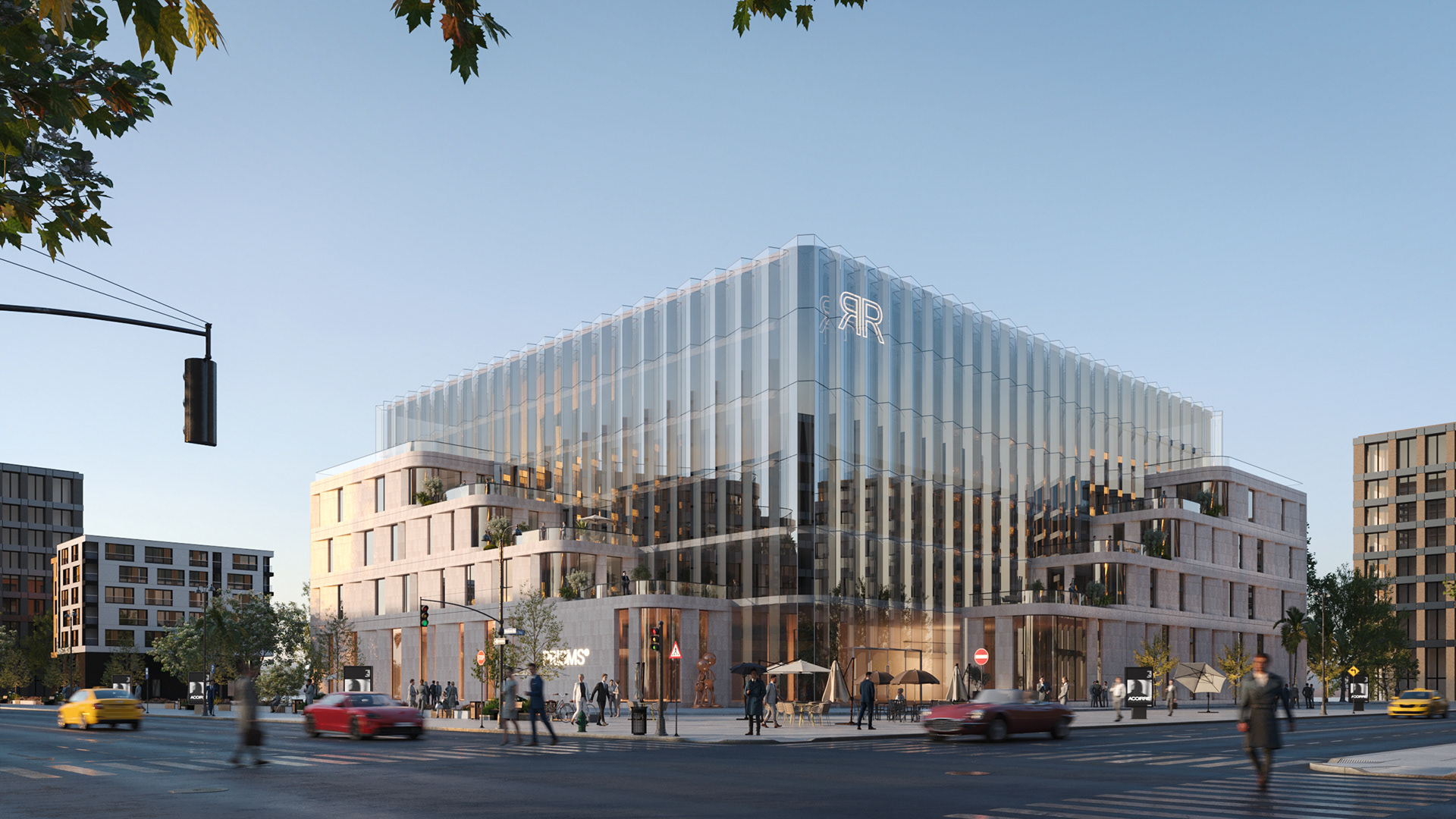
Prisms by Accoire
New Admin Capital, Egypt
Designed by Nuvelti
Project type Mixed-Use
a mixed-use architectural project that explores the dialogue between stone and glass, permanence and transformation.
IDEA.
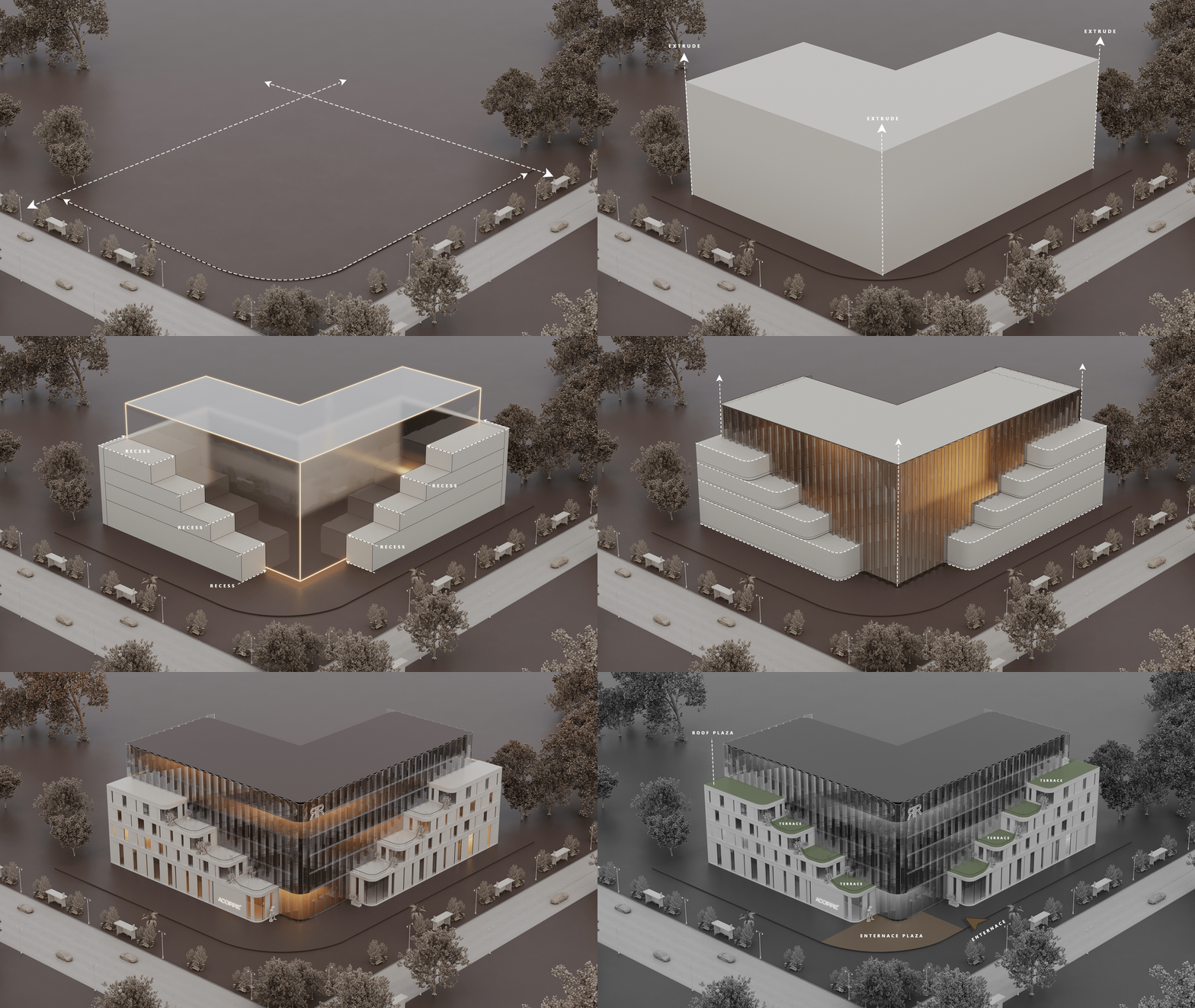
The core design concept is inspired by the idea that when stone fractures, glass is born—and through glass, light is refracted into prisms. This metaphor becomes the foundation of the building’s massing, materiality, and spatial experience.
Massing.
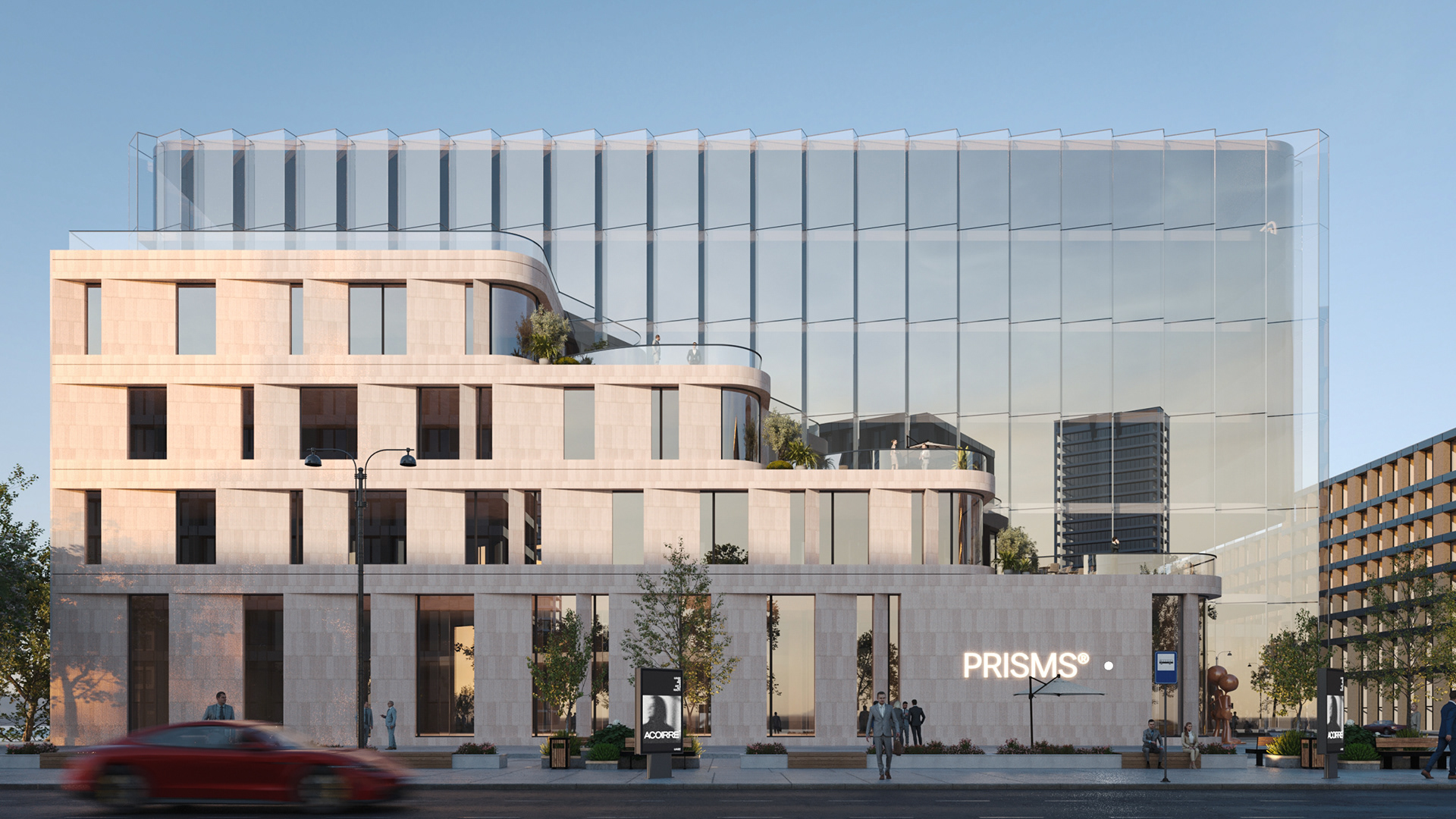
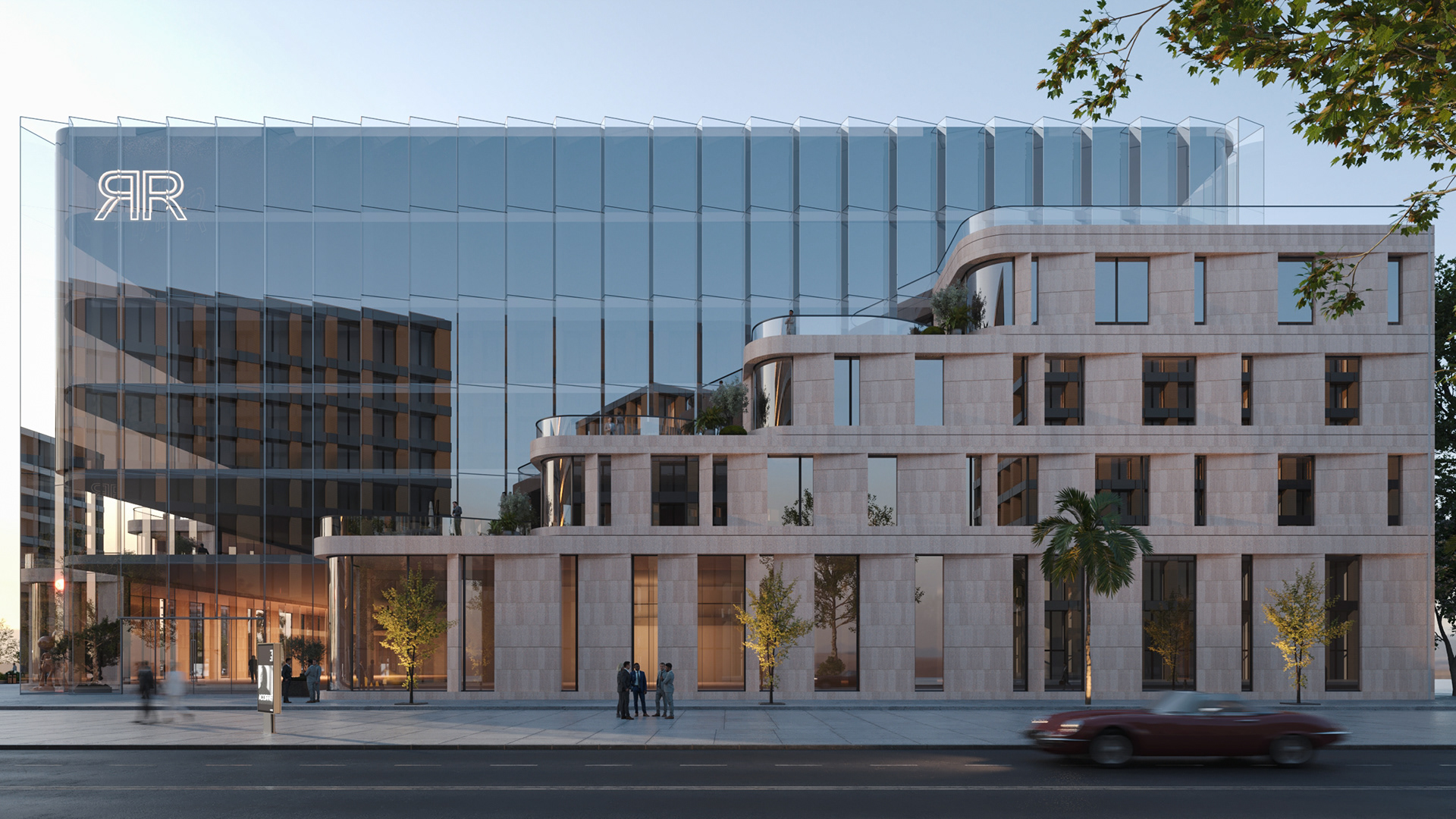
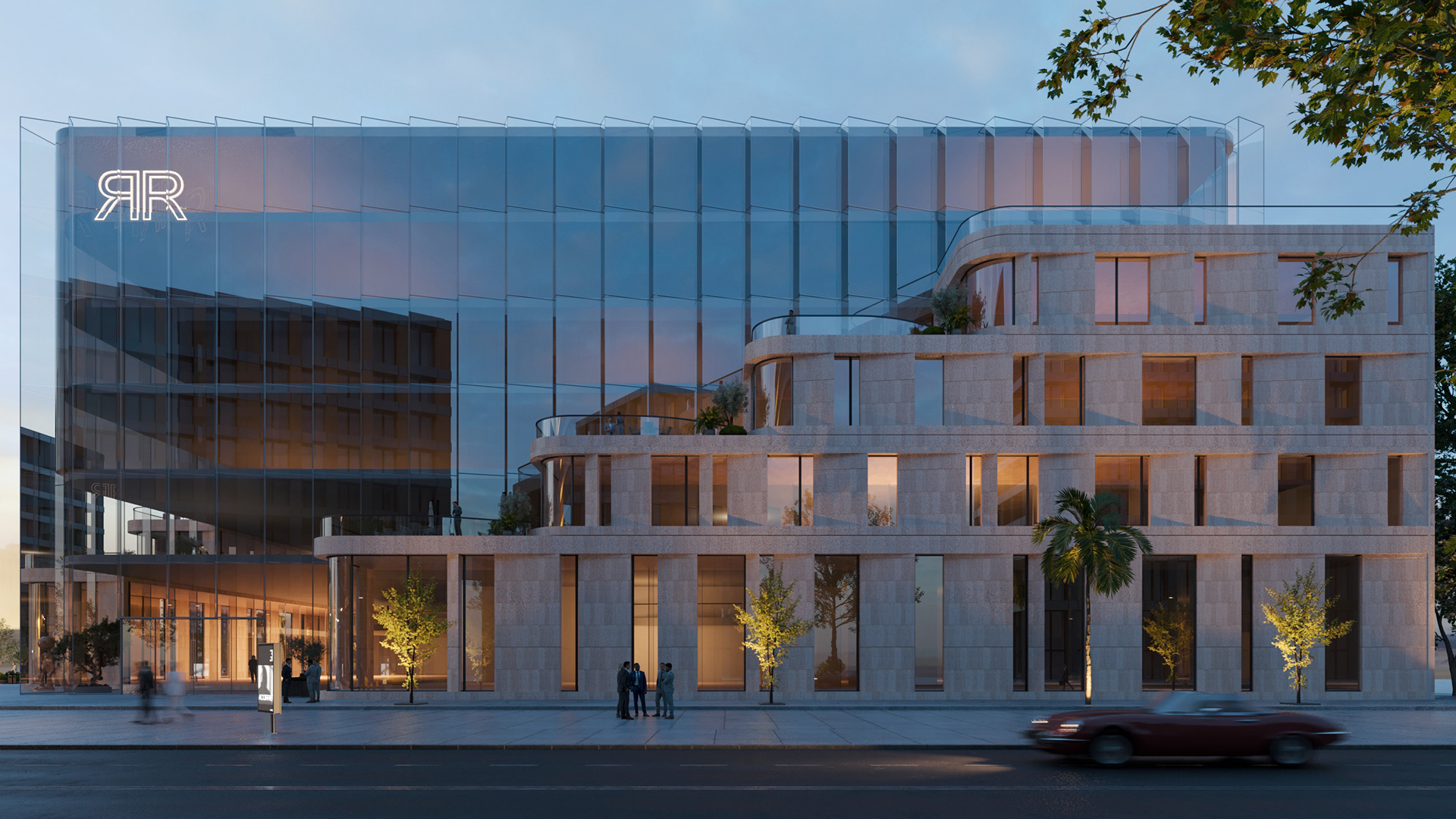
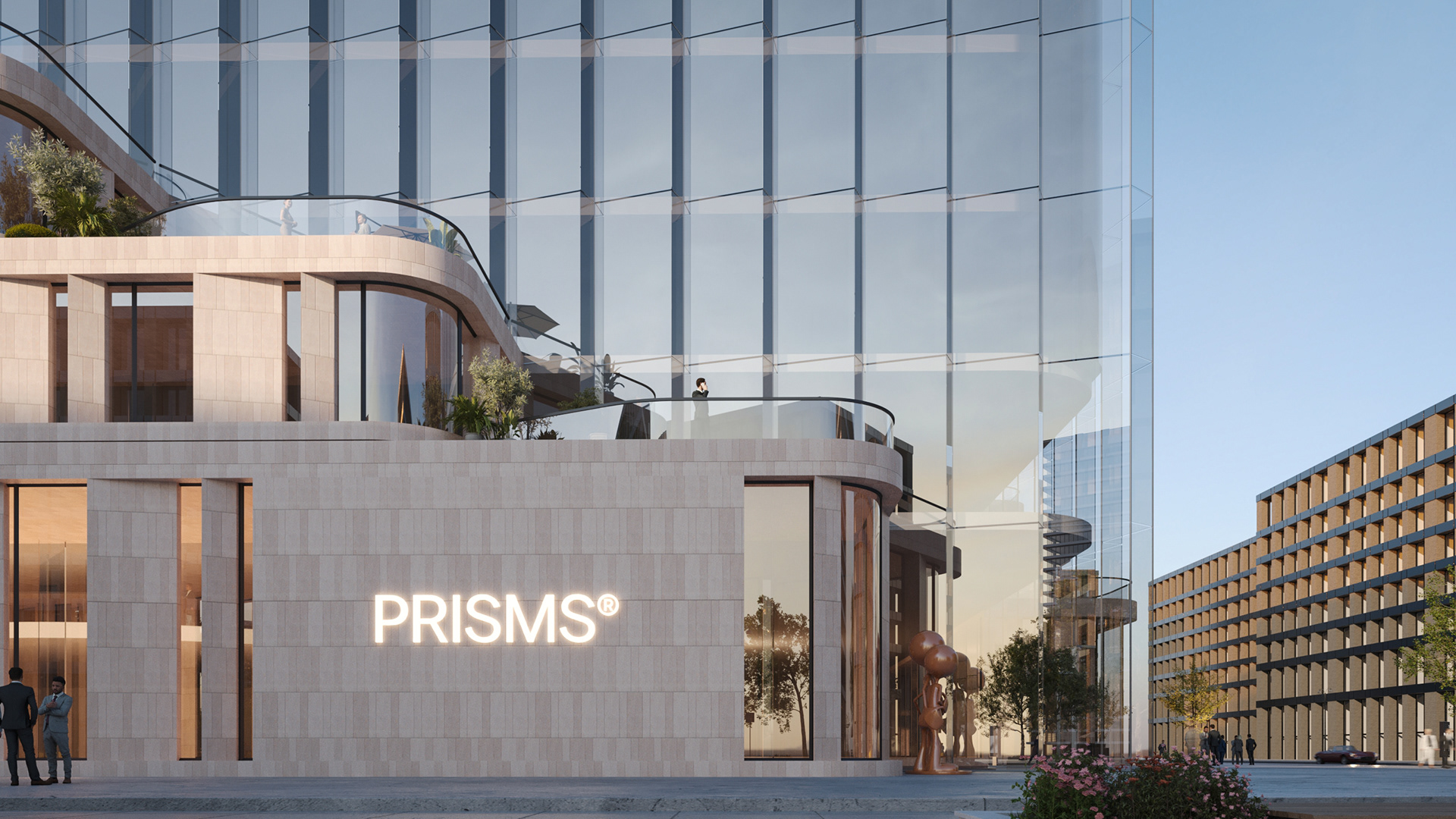
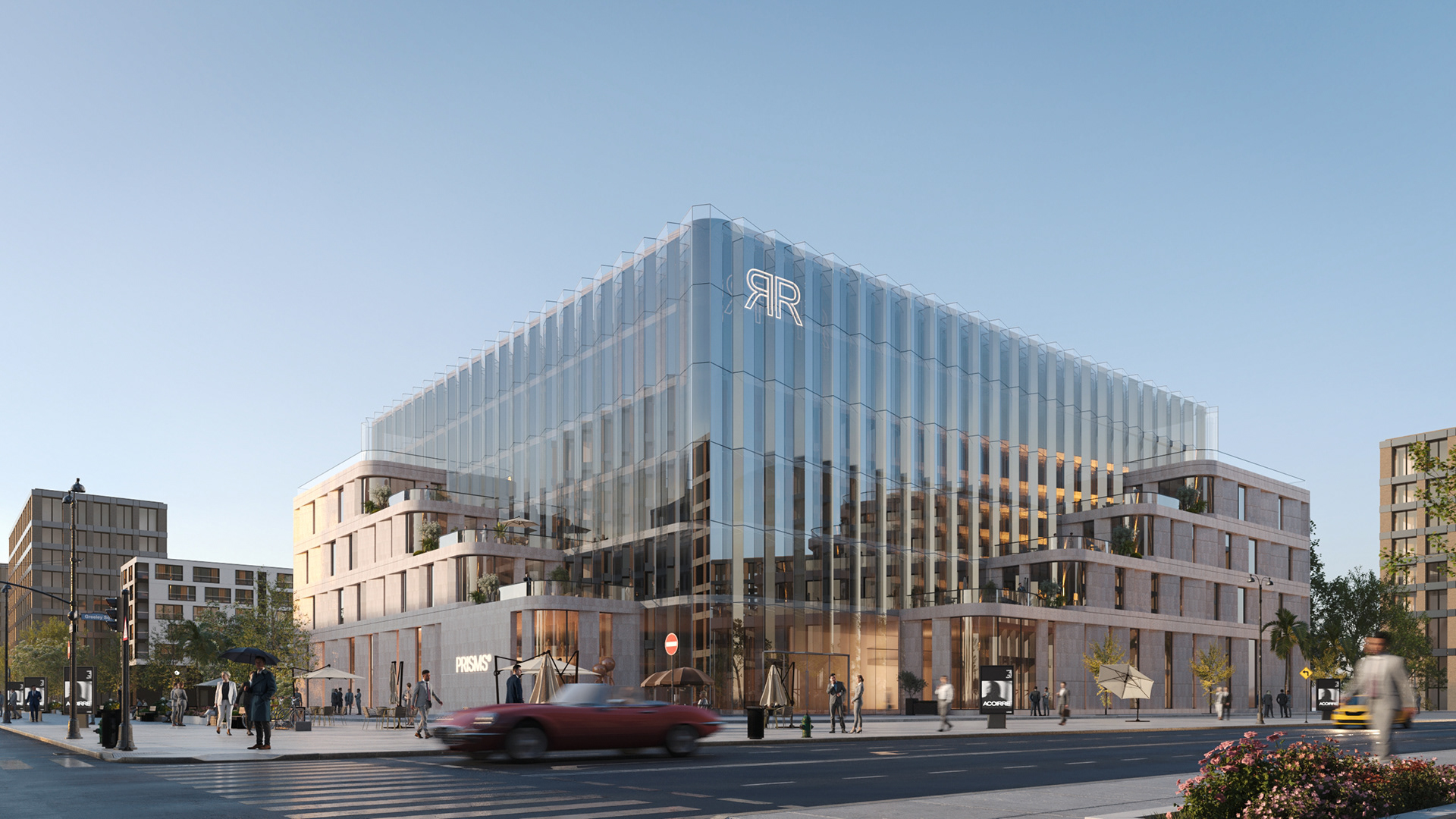
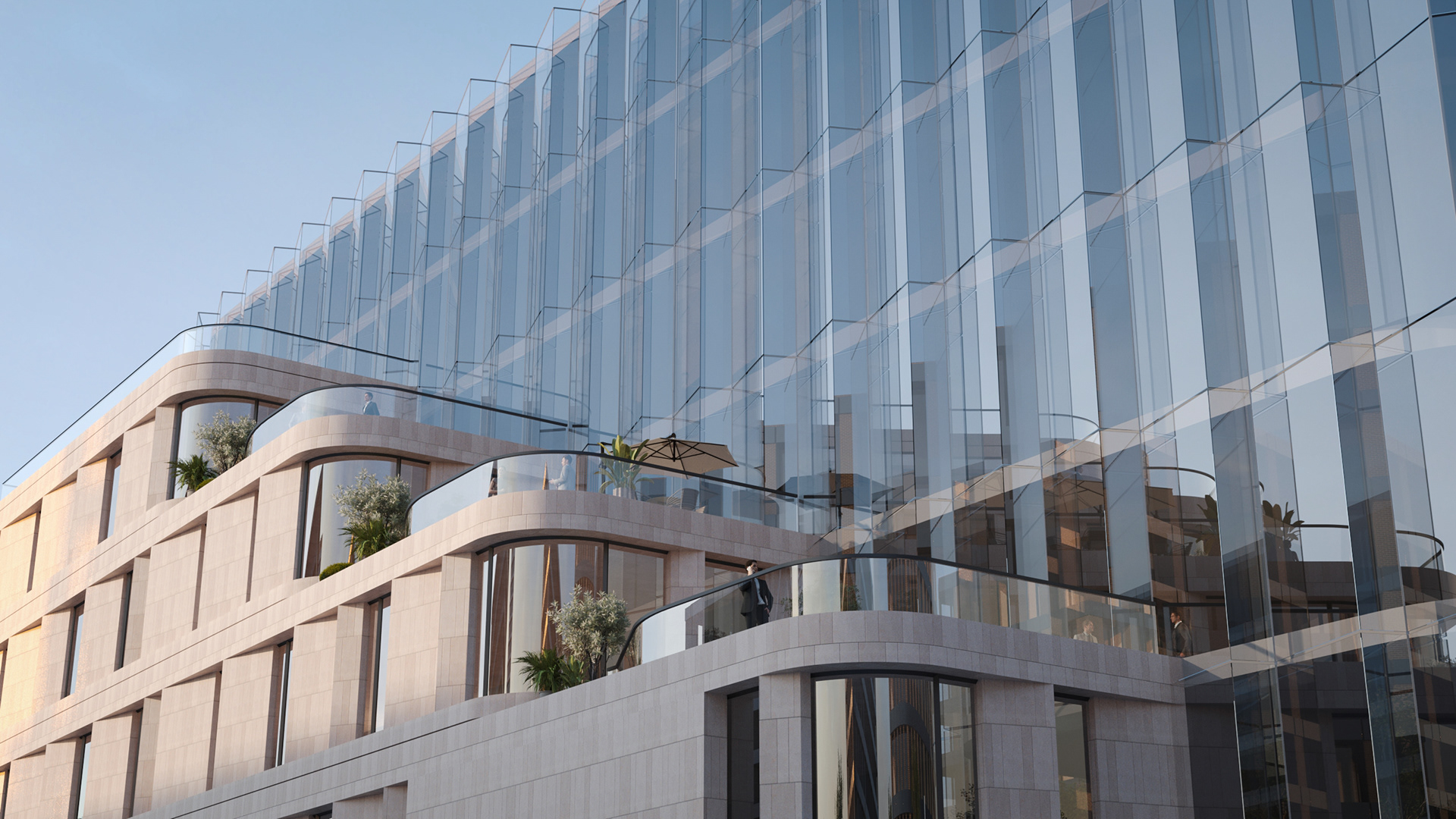
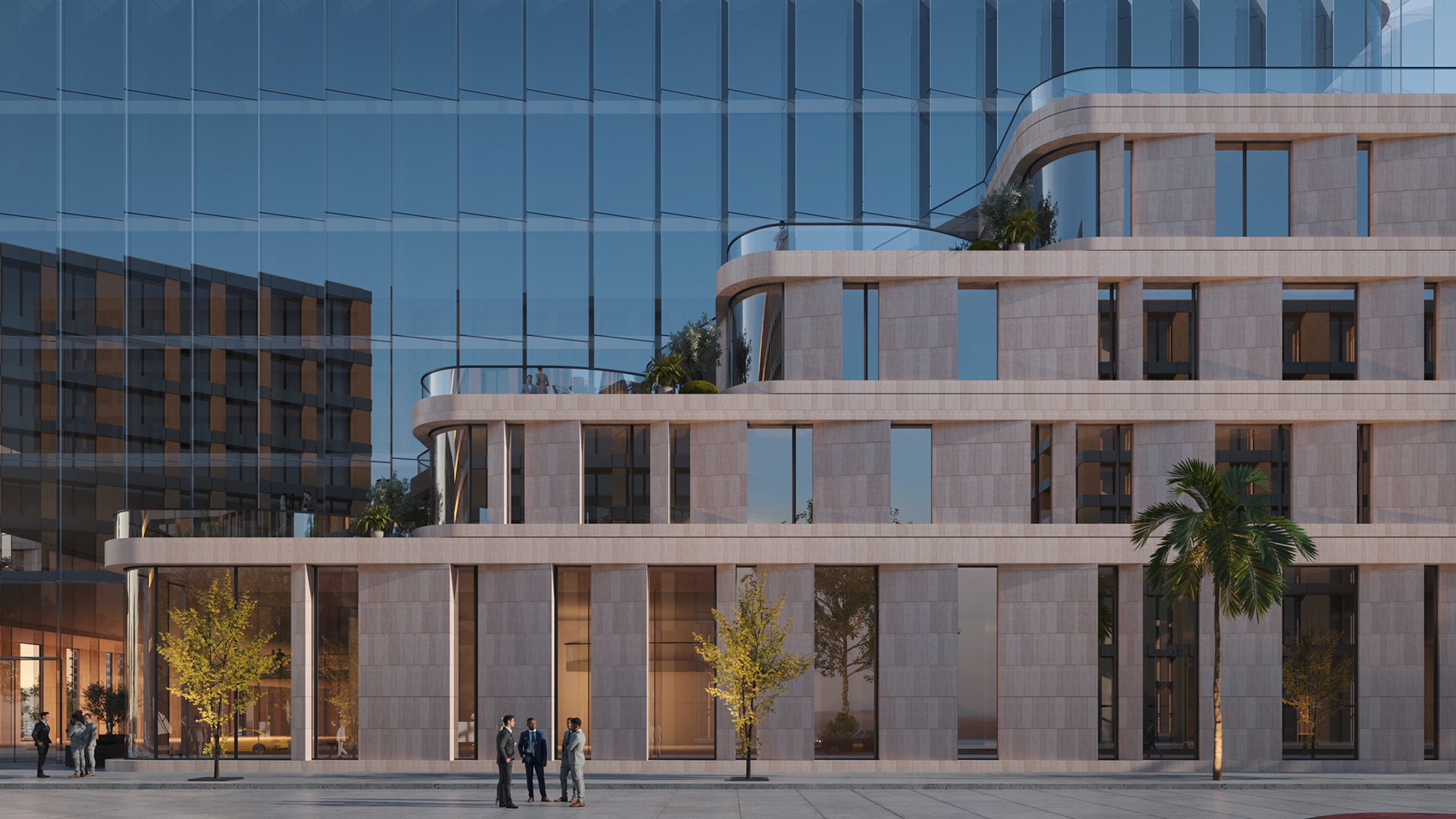
The building is composed of two gradual stone volumes on the right and left, framing a central glass mass that appears to emerge from within the stone itself.
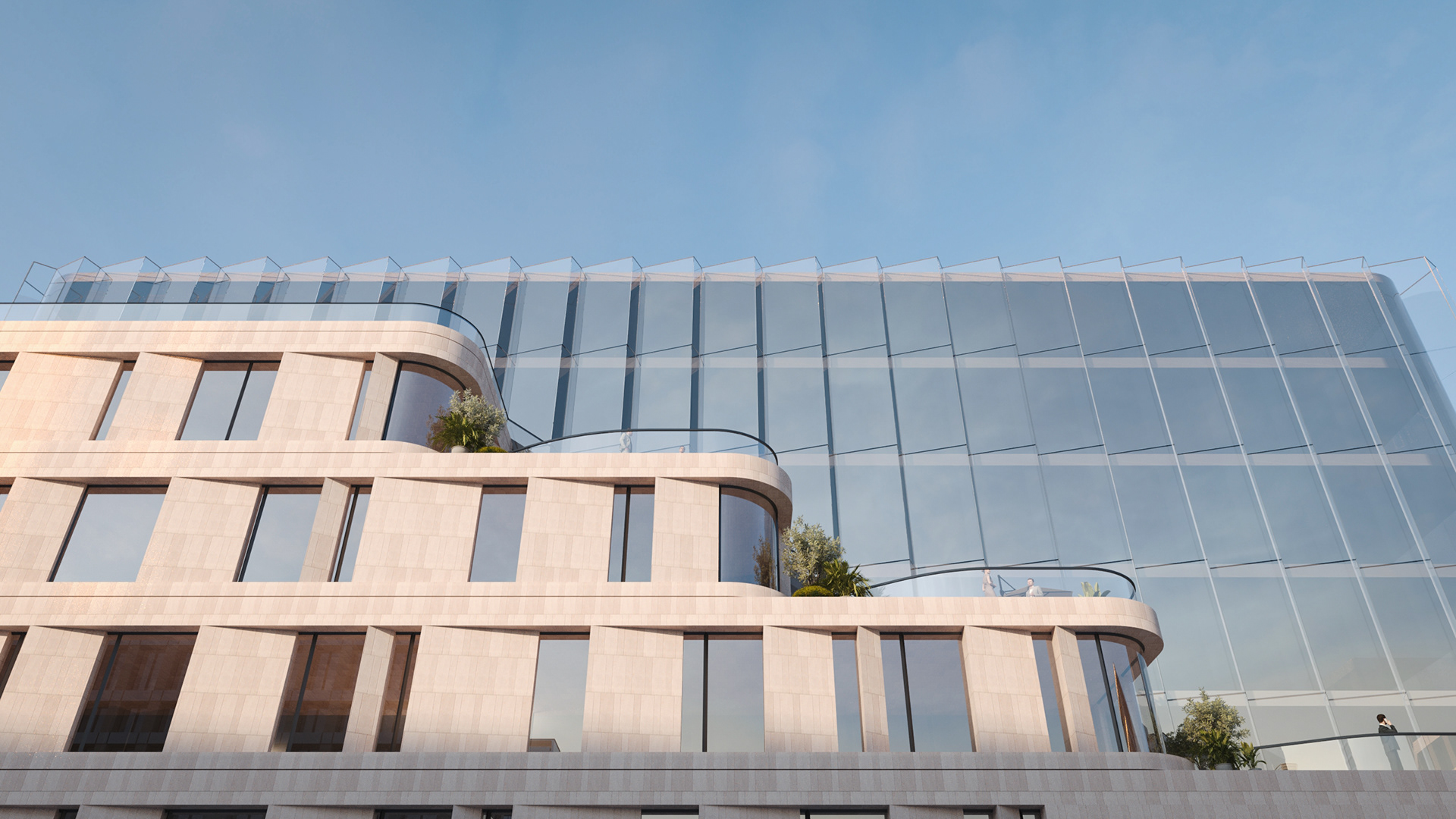
These stone volumes are intentionally stepped back as they rise, creating a sense of gradual erosion and allowing the formation of open terraces for the administrative offices on every floor.
These stone volumes are intentionally stepped back as they rise, creating a sense of gradual erosion and allowing the formation of open terraces for the administrative offices on every floor.
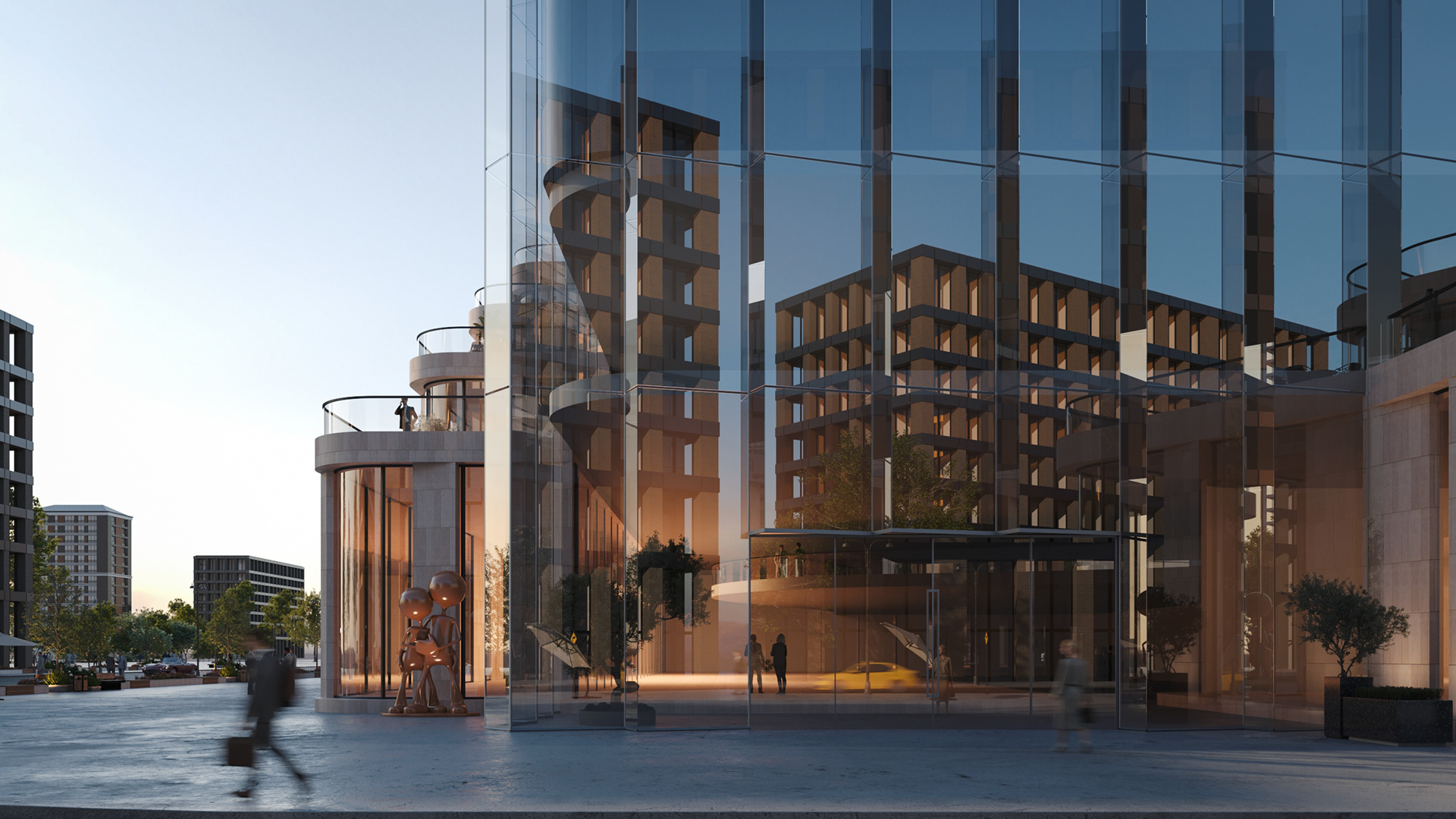
At the heart of the project stands a monumental glass volume, visually lighter and more expressive, symbolizing the transformation of stone into glass.
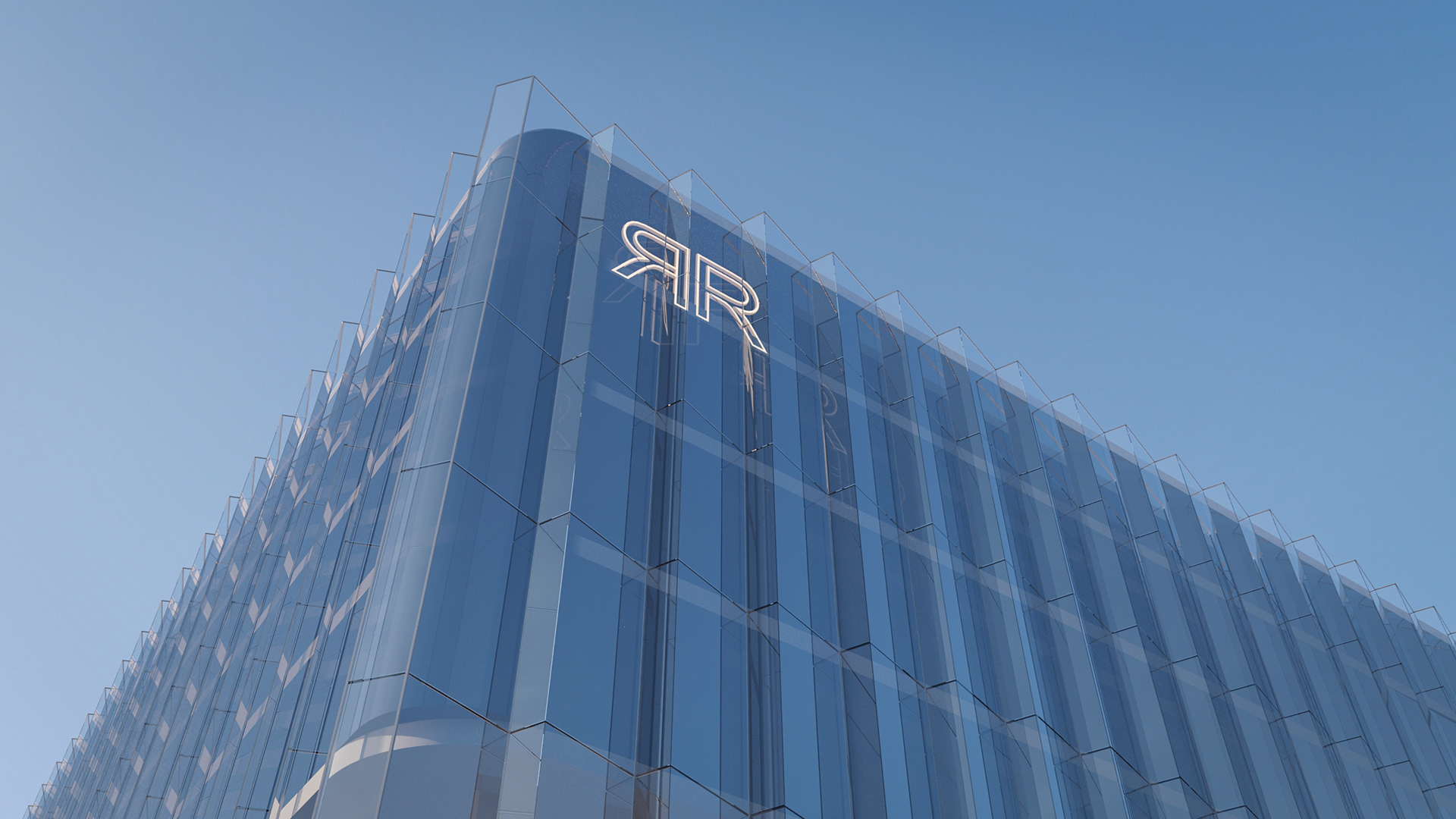
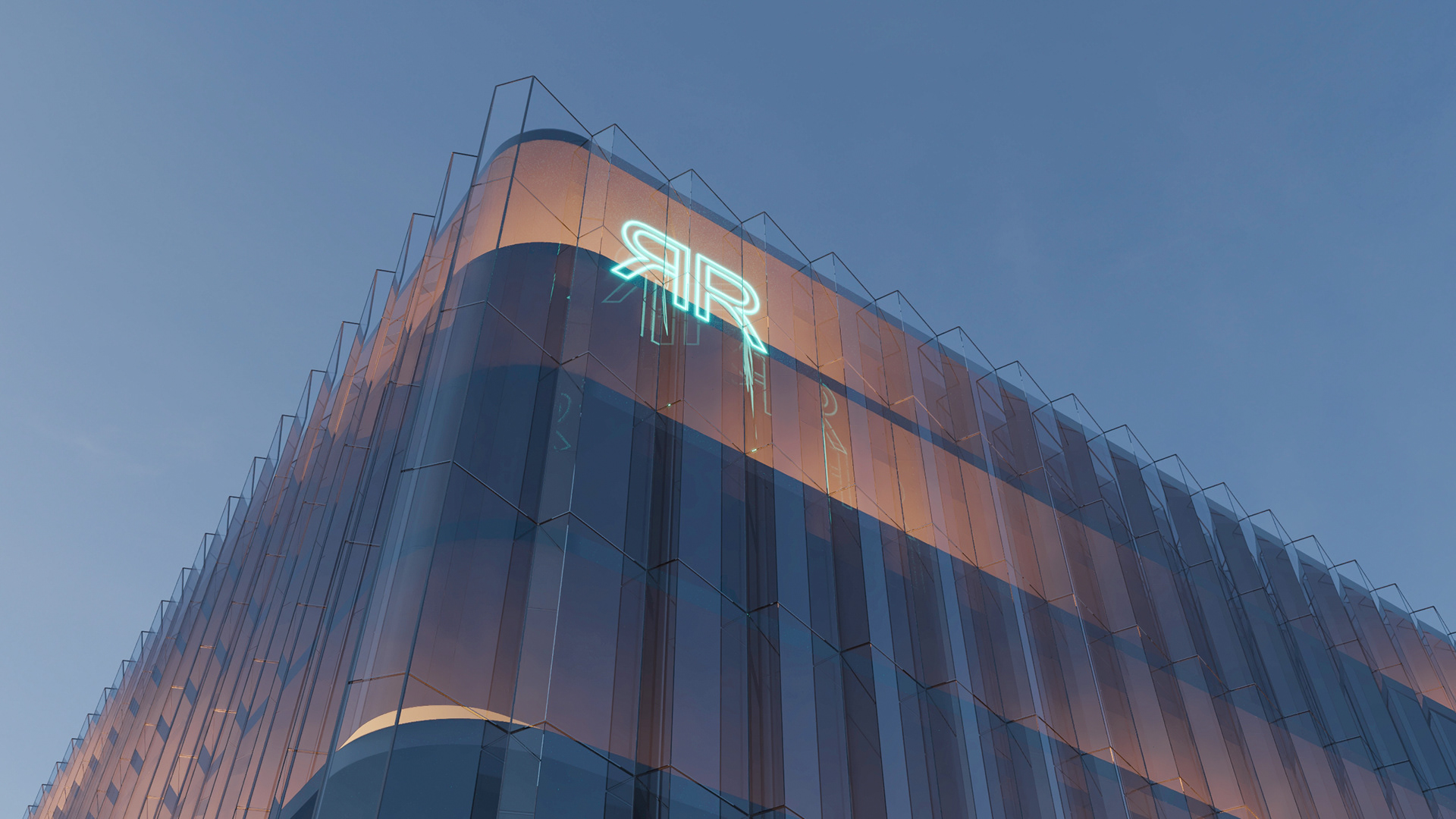
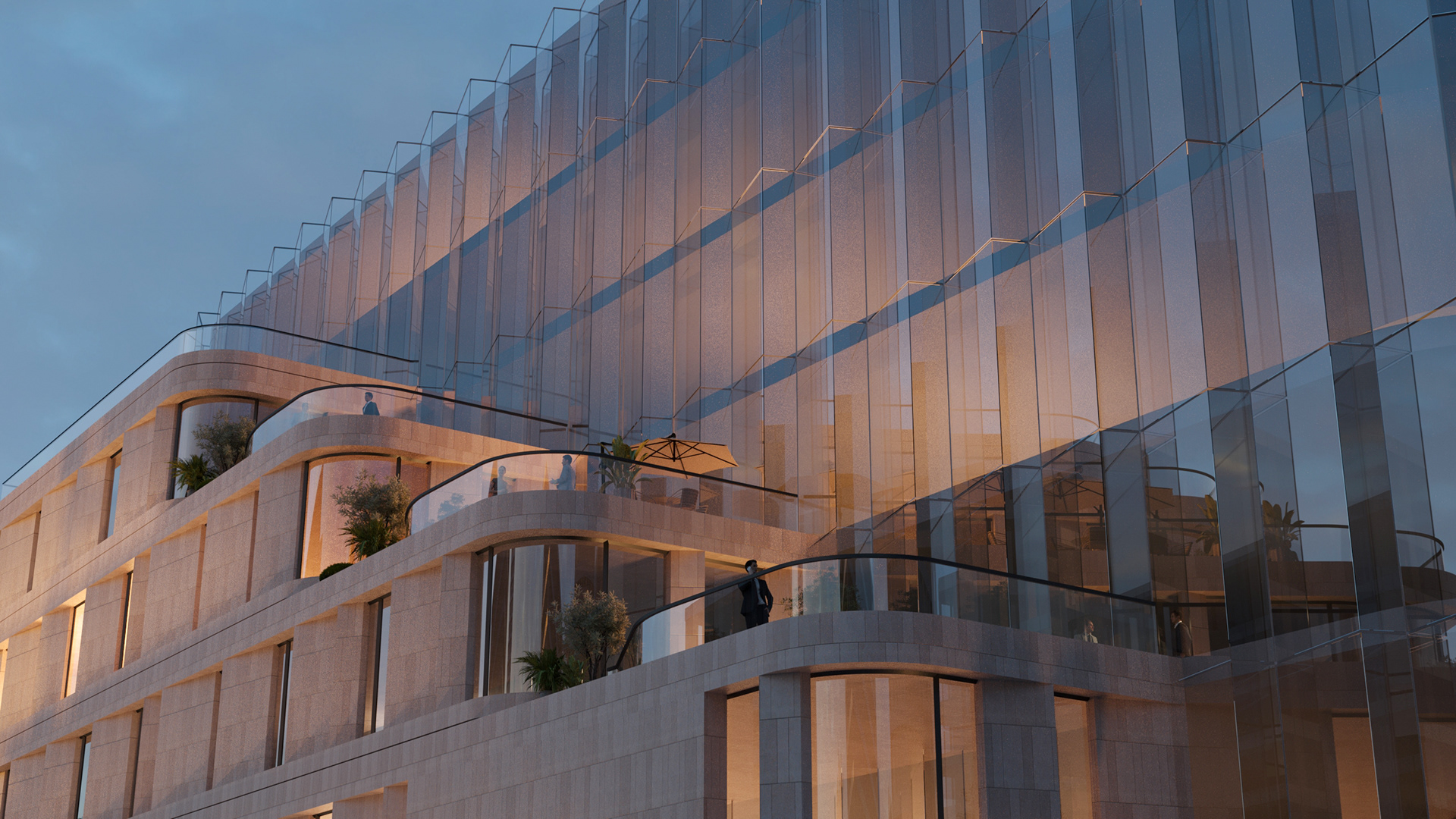
Facade Strategy.The central glass mass is articulated using a zigzag glass system, designed to refract light and create a prism-like visual effect throughout the day. This dynamic facade contrasts with the static, solid stone cladding of the side volumes, reinforcing the conceptual tension between solidity and transparency.
The interplay of reflections, light, and shadow gives the building a constantly changing appearance, while maintaining a strong architectural identity within its urban context.
Urban Context.
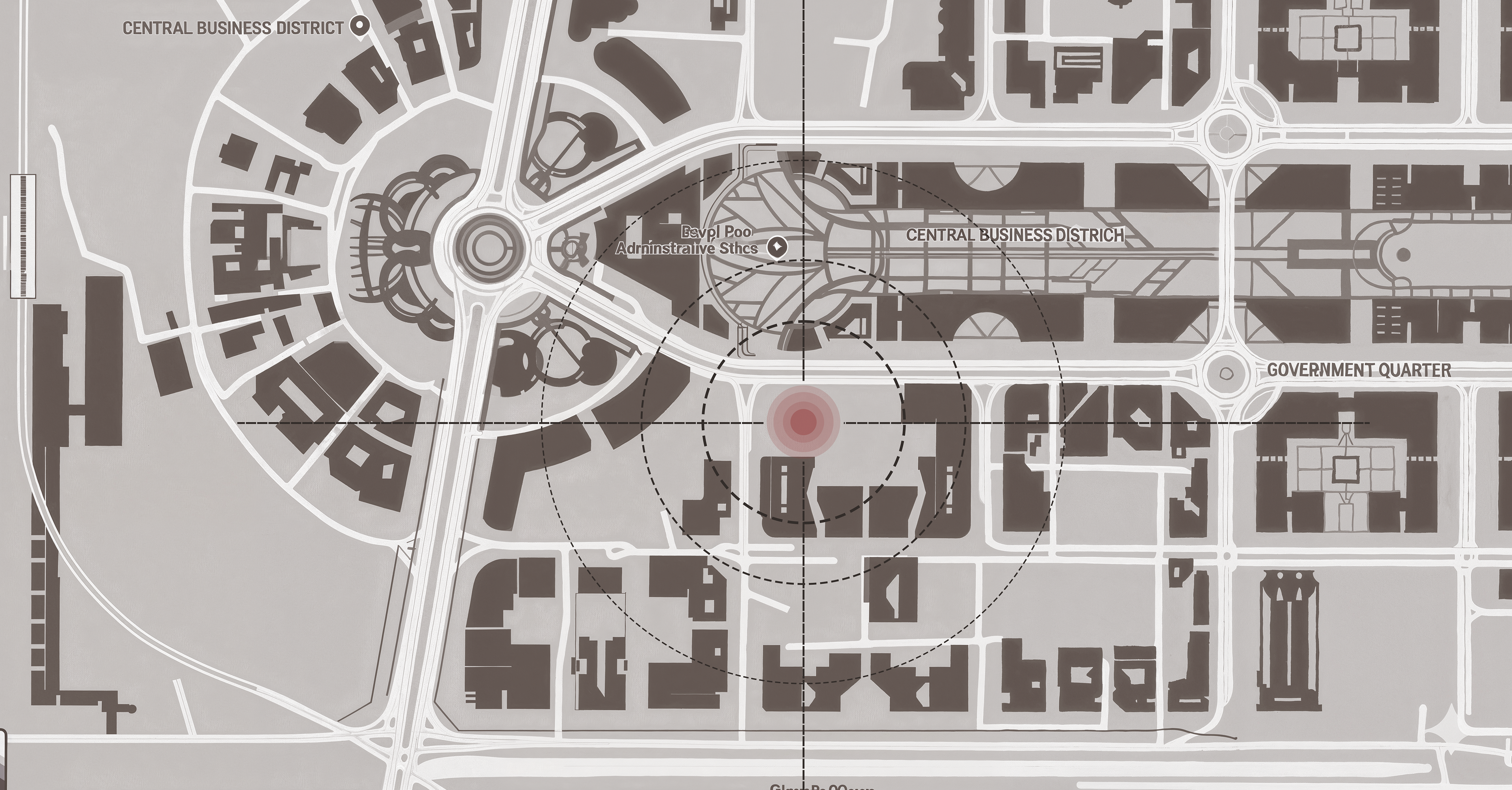
Located in the New Administrative Capital of Egypt, the project responds to its contemporary setting with a modern architectural language, while maintaining a sense of monumentality and clarity suitable for a prominent mixed-use development.